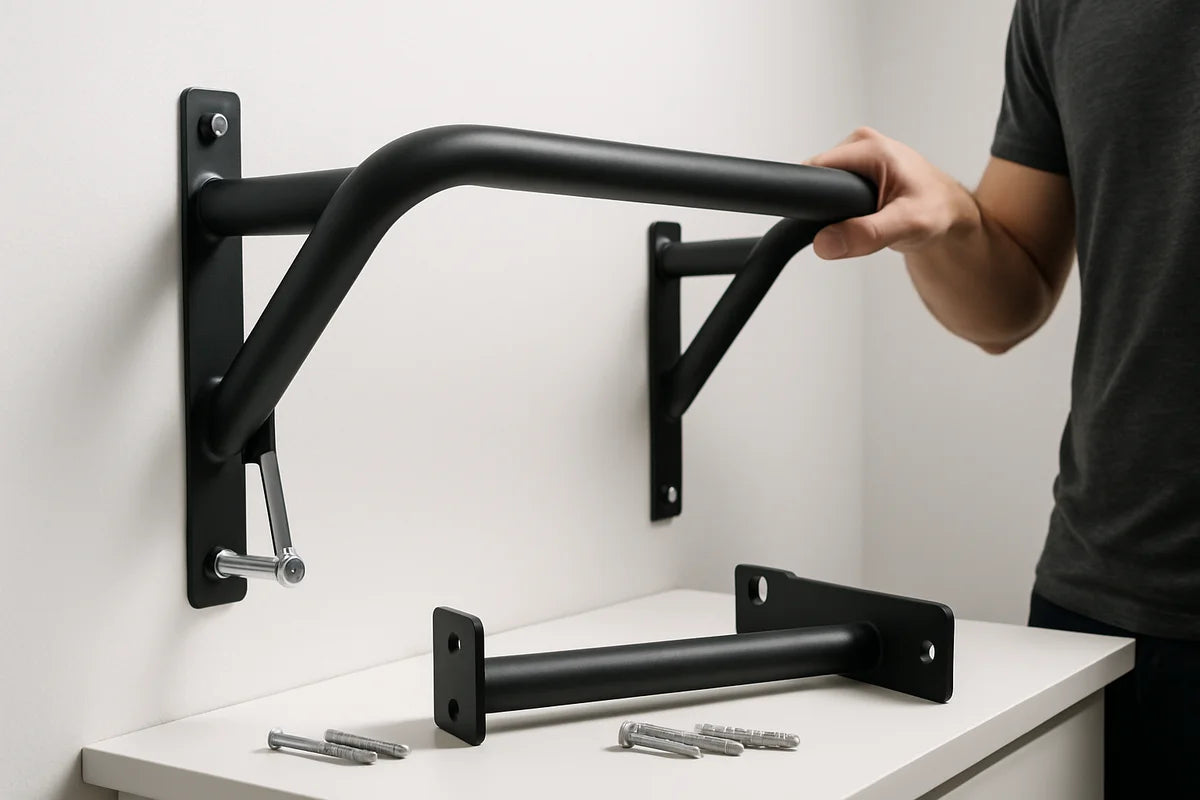
A pull-up bar is one of the best strength tools you can add to a small apartment. It takes almost no floor space, it works your back, arms, grip, and core, and it nudges you to train more often because it’s right there.
But wall mounting can feel risky. You don’t want to drill into the wrong spot, crack drywall, hit a wire, or annoy your neighbors with a bar that rattles every rep. This guide walks you through how to wall mount a pull up bar in a small apartment with smart planning, the right hardware, and a clean install that holds up.
First, check your lease and your walls

Before you buy a bar or touch a drill, check two things: what your building allows, and what your wall can handle.
Lease rules and repair expectations
Some landlords don’t care about small holes if you patch them when you move out. Others do. If your lease is strict, ask in writing. A simple message helps: “I’d like to install a wall-mounted pull-up bar into studs and will patch and paint on move-out. Is that OK?”
Know what kind of wall you have
- Drywall over wood studs is the most common and the easiest to work with.
- Drywall over metal studs is trickier. Many pull-up bars can still work, but you may need specialty anchors or a different location.
- Masonry (brick, concrete) can be very solid, but you need masonry bits and proper anchors.
- Plaster can crack if you rush. Pre-drill carefully and use sharp bits.
If you’re not sure, knock and listen, look at outlet boxes, or use a stud finder that can detect stud edges and live wires.
Pick the right pull-up bar for a tight space

When people talk about how to wall mount a pull up bar in a small apartment, the “small apartment” part changes everything. Depth, ceiling height, and noise matter as much as strength.
Wall-mounted vs doorframe vs ceiling-mounted
- Wall-mounted bars feel stable and free up doorways, but they need drilling and solid framing.
- Doorframe bars avoid drilling, but they can damage trim, limit range of motion, and feel cramped in narrow halls.
- Ceiling-mounted bars work well in some layouts, but joist access and ceiling height can limit you.
If you rent and can’t drill, a doorframe bar might be the only option. If you can drill, a wall-mounted bar usually feels best for strict pull-ups and chin-ups.
Measure the “use space,” not just the wall space
Grab a tape measure and check:
- Ceiling height: you need room for a dead hang without your feet scraping the floor.
- Bar projection (how far it sticks out): too deep and it eats the room; too shallow and your knuckles hit the wall.
- Side clearance: wide grip needs space so your hands don’t hit shelves or door casings.
- Swing zone: kipping isn’t apartment-friendly. Plan for strict reps.
If you want help judging pull-up form and range of motion, the American Council on Exercise exercise library offers clear movement standards you can compare against your setup.
What you’ll need (and what not to cheap out on)
A solid install comes down to two things: hitting studs (or masonry) and using hardware that matches your wall type.
Tools
- Stud finder (ideally with wire detection)
- Tape measure
- Level
- Drill/driver
- Drill bits (wood bits or masonry bits depending on wall)
- Socket wrench or ratchet set
- Pencil and painter’s tape
Hardware
- Lag screws or structural screws rated for load
- Washers (often included with the bar)
- Optional: 2x8 or 2x10 backer board if stud spacing doesn’t match the bracket holes
Skip generic plastic drywall anchors. A pull-up bar applies dynamic force, not just static weight. If you can’t mount into studs or masonry, choose a different spot or a different bar.
For a plain-English look at anchors, fasteners, and what they’re meant to do, Family Handyman’s anchor guide breaks down common options without making it complicated.
Find the best mounting spot in a small apartment
Most people pick a wall based on convenience. Pick it based on structure and clearance.
Good locations
- A hallway wall with clear side space
- A living room wall where furniture won’t block your legs
- A bedroom wall if you can control noise and you won’t kick a dresser
- A masonry wall if your apartment has one and you can drill it
Locations to avoid
- Walls shared with a neighbor’s bedroom, if you train early or late
- Near fragile plaster corners or where the wall already has damage
- Directly above baseboard heaters or near sprinkler lines
- Where a door will swing into your body or the bar
Don’t guess where wires are
Studs often run beside outlets and switches, and wires can run vertically or horizontally depending on the build. Use a stud finder that warns of live AC, and keep your mounting height away from outlet-height runs when possible. For general safety guidance around household wiring, Electrical Safety Foundation International is a useful reference.
How to wall mount a pull up bar in a small apartment (step-by-step)
This section assumes you’re mounting to wood studs behind drywall, which is the most common apartment setup. If you have masonry or metal studs, keep reading for adjustments later.
1) Mark your target height
Stand where you’ll train and reach up like you’re grabbing the bar. You want a full hang without your knees bending too much, but you also want enough room above the bar so your head doesn’t hit the ceiling at the top.
- If your ceilings are low, plan to bend your knees during hangs.
- If you’re tall, consider a bar with less wall projection so you can mount a bit higher without crowding the ceiling.
Put painter’s tape on the wall and mark your rough height in pencil.
2) Find studs and confirm spacing
Run the stud finder slowly. Mark both stud edges, then mark the center. Most studs are 16 inches on center, but don’t assume. Confirm with a small test hole if you need to.
Hold the bar’s mounting bracket up to your marks. If the bracket holes line up with studs, great. If not, you have two clean options:
- Use a wood backer board anchored into two or three studs, then mount the bar to the board.
- Pick a different wall section where the holes land on studs.
3) Decide if you need a backer board
A backer board solves a lot of small-apartment problems. It spreads load, gives you flexibility on bar placement, and can reduce wall damage by keeping the bracket tight and stable.
- Use a straight 2x8 or 2x10 cut wide enough to hit at least two studs.
- Sand sharp edges so you don’t snag hands or towels.
- Paint it to match the wall if you care about looks.
4) Pre-drill pilot holes
Hold the bracket (or backer board) in place, level it, and mark holes. Then pre-drill pilot holes into the stud centers. Pilot holes help the lag screws bite cleanly and reduce splitting.
- Use the bit size recommended by the pull-up bar maker.
- Keep the drill straight. Don’t angle it up or down.
5) Mount the bracket (or backer board) tight to the wall
Drive lag screws with washers. Stop when the bracket sits flush and doesn’t move. Don’t crank until you crush drywall. If you used a backer board, mount the board first, then mount the bar brackets into the board using the hardware the manufacturer recommends.
6) Install the bar and check alignment
Attach the bar to the brackets. Use a level one more time. Small misalignment can feel big when you’re hanging from it.
7) Load test it the safe way
Don’t jump to your first rep. Test in steps:
- Grab the bar and pull down hard with feet on the floor.
- Hang with bent knees for 5-10 seconds.
- Do one slow pull-up or chin-up.
- Listen for creaks and watch for bracket shift.
If anything moves, stop and fix it. Most problems come from missing the stud center, using the wrong screw length, or leaving a small gap between bracket and wall.
Special cases: masonry, metal studs, and weird apartment walls
Mounting into brick or concrete
Masonry can hold a bar very well, but you must use the right anchors and a hammer drill. Follow the bar maker’s specs. If they don’t list masonry hardware, contact them or choose a model that does.
For a deeper look at concrete anchors and their load ratings, Concrete Construction has practical articles that explain what different anchors are built to handle.
Mounting with metal studs
Many apartment buildings use metal studs. They can work, but they don’t hold lag screws the way wood studs do. If you suspect metal studs:
- Confirm by checking the stud finder signal and probing carefully.
- Use a backer board that spans multiple studs, with the correct toggle-style anchors rated for dynamic loads, or choose a different wall.
- If you can’t verify the structure, don’t guess. Pick another mounting plan.
Plaster walls
Plaster can crack if you drive hardware too fast. Drill clean pilot holes, avoid over-tightening, and consider a backer board to spread load and reduce stress on the plaster surface.
Noise control and neighbor-friendly setup
Even a perfect mount can annoy people if the bar squeaks or thumps. Small apartments amplify sound.
Reduce vibration at the source
- Tighten all bolts, then re-check after a week of use.
- Add thin rubber washers where metal meets metal if the design allows it.
- Use chalk sparingly. It can dry out grips and leave dust on walls and floors.
Train in a way that suits the building
- Stick to strict reps and controlled negatives.
- Skip kipping, swinging, and jump pull-ups.
- Put a thick mat under your feet if you’ll drop from the bar.
Safety checks you should do every month
A wall-mounted bar can feel “set and forget,” but wood moves and bolts can loosen. A two-minute check keeps it safe.
- Grab the bar and shake it side to side. You should feel no play.
- Look for hairline cracks in drywall around the bracket.
- Check for rust if you sweat a lot or live in a humid place.
- Re-tighten bolts snugly, but don’t strip them.
If you want a simple way to track your pull-up progress once the bar is up, Stronger By Science training tools offers practical calculators and templates you can adapt for bodyweight work.
Common mistakes (and how to avoid them)
Mounting into drywall only
If the bracket isn’t anchored into studs or masonry, it’s a matter of time. Drywall isn’t structural.
Placing the bar too close to the ceiling
You need head clearance at the top. If your chin clears the bar but your head hits the ceiling, you’ll dread using it.
Ignoring stud spacing vs bracket hole spacing
If the holes don’t match studs, don’t improvise with random anchors. Use a backer board or move the bar.
Over-tightening lag screws
You can crush drywall and create a gap later. Tighten until secure and flush, then stop.
Where to start if you want results, not just a mounted bar
Once you finish how to wall mount a pull up bar in a small apartment, the next win is making it part of your week. Keep it simple for the first month. Pick a plan you’ll actually do.
A low-fuss 3-day weekly starter plan
- Day 1: 3 sets of assisted pull-ups or slow negatives + 3 sets of dead hangs
- Day 2: 4-6 sets of chin-ups (or band-assisted) + 2 sets of scapular pull-ups
- Day 3: 10-minute “grease the groove” session: do 1-3 easy reps several times, never to failure
If you don’t have a band, use a chair for light foot support. Keep reps smooth and quiet. Your joints will feel better, and your neighbors will too.
From here, you can add a set, slow the lowering phase, or start using small weight once your reps are solid. The bar won’t just save space. It’ll change what “quick workout” means in your apartment, because you can train hard in ten minutes without moving furniture.
Share:
Grip Strength for Parkour: Build Hands That Don’t Quit
Army Basic Training Workout Routine PDF Free Download: Build a Plan You Can Trust (and Actually Finish)