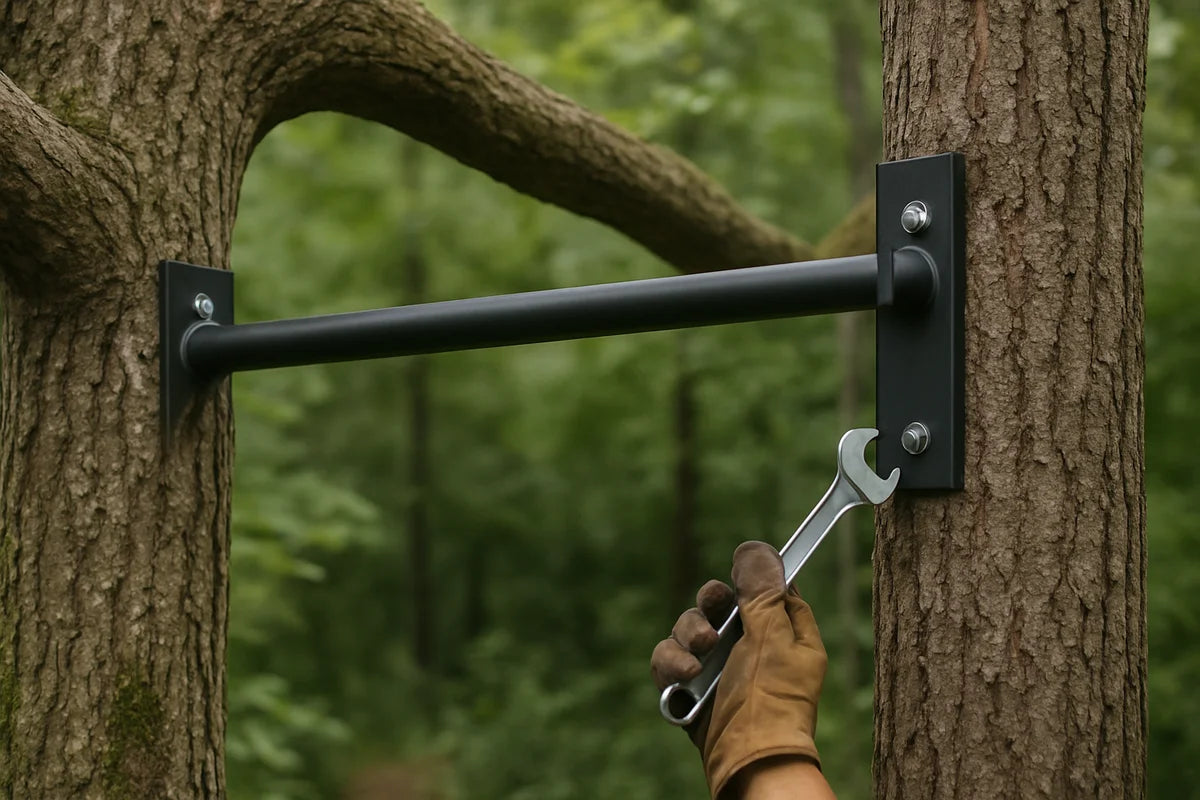
A pull up bar looks simple. It’s a bar you hang from, right? But the install is where most beginners get tripped up. The wrong bar for your doorway, a loose mount, or a weak wall can turn a great home workout tool into a safety risk.
This article walks you through pull up bar installation tips for beginners in plain language. You’ll learn how to pick the right style, check your space, mount it with confidence, and keep it tight over time.
Start by choosing the right type of pull up bar

Your first “installation” choice is the bar itself. Different styles load your home in different ways. Pick the wrong style and no amount of careful mounting will feel right.
Doorway bars (no screws) are quick, but not foolproof
Most doorway bars use leverage against the door frame. They’re popular because they don’t require drilling. They can work well, but only if your trim and frame are solid and the bar fits your doorway shape.
- Best for: renters, light-to-moderate use, standard door frames
- Watch out for: weak trim, shallow molding, odd frame shapes
- Common mistake: trusting “no screws” to mean “no risk”
Some models can scuff paint or compress trim. If your doorway has fragile molding, consider a wall-mounted bar instead.
Screw-in doorway bars can be stable, but they rely on the frame
The twist-to-expand style that braces inside the doorway can feel sturdy at first. The problem is that many door frames are not built to take repeated dynamic loads. If you kip, swing, or drop into a dead hang, you can slowly loosen the bar or damage the frame.
- Best for: controlled reps and light loading
- Watch out for: gradual slip, crushed drywall edges, frame damage
Wall-mounted and ceiling-mounted bars are the most secure
If you want the most stable setup, mount a fixed bar into studs or ceiling joists. This takes more work, but it spreads force into the structure of your home instead of trim or drywall.
- Best for: frequent training, weighted pull ups, taller users, gymnastic rings
- Watch out for: mounting into drywall, missing studs, using weak screws
If you’re not sure which style fits your goals, the American Council on Exercise training resources can help you think through how you’ll use the bar so you can match the hardware to the workout.
Check your space like you’re about to hang from it (because you are)

Before you drill or wedge anything, measure and inspect. A few minutes here prevents most install problems.
Measure the doorway (or wall) the right way
- Doorway width: measure inside edge to inside edge, not trim-to-trim unless your model hooks over trim
- Trim depth: many leverage doorway bars need enough lip to “catch”
- Head clearance: can you fully extend your arms without your feet hitting the floor?
- Side clearance: will your hands hit walls when you use wide grips?
Inspect the structure, not just the paint
Push on the trim. Does it move? Look for cracks at the corners of the frame. If the trim flexes under hand pressure, don’t bet your bodyweight on it.
For wall or ceiling mounts, you need solid framing. Drywall alone won’t handle pull up forces safely. If you want a clear refresher on basic load concepts and safe anchoring, the OSHA safety guidance is a good baseline for thinking about load, fasteners, and failure points in plain terms.
Tools and hardware beginners should have on hand
Good installs feel boring. Nothing creaks. Nothing shifts. The easiest way to get there is to use the right tools.
- Tape measure
- Stud finder (for wall or ceiling mounts)
- Level
- Drill and drill bits (including a bit for pilot holes)
- Socket wrench or screwdriver (whatever your bolts require)
- Pencil for marking
If your pull up bar includes hardware, read the parts list and match each bolt to the instructions. If anything looks flimsy or short, replace it with better fasteners rated for your wall type. When in doubt, ask a hardware store staffer for help with load-rated lag screws and washers.
Pull up bar installation tips for beginners (step-by-step)
Installation varies by bar type, but the safety checks stay the same: square alignment, strong attachment points, and a test before full use.
Doorway leverage bar: install and safety checks
- Wipe the trim and contact points so dust doesn’t reduce grip.
- Assemble the bar fully and tighten all bolts before mounting.
- Hook the bar over the top of the frame exactly as the manual shows.
- Center it left-to-right so the load stays even.
- Before you hang, push down on the bar with both hands and watch for shifting.
- Do a controlled “partial load” test: one foot on the floor, slowly add weight.
- Only then do a dead hang, still controlled, with no swinging.
Two extra beginner tips that save headaches:
- Protect the frame with thin rubber pads if your model doesn’t include them.
- Take the bar down when you’re done if other people use the doorway. It prevents surprise bumps and keeps the fit snug.
Wall-mounted pull up bar: install into studs, not drywall
This is the most common place beginners go wrong. They use drywall anchors because they “feel tight.” Tight does not mean safe.
- Find studs and confirm them. Use a stud finder, then verify by measuring 16 inches center-to-center or tapping and probing carefully.
- Mark your hole positions. Hold the bracket up, level it, and mark each hole.
- Drill pilot holes. Pilot holes help lag screws bite without splitting studs.
- Mount the bracket with washers. Washers spread force and reduce loosening.
- Tighten firmly, but don’t strip the wood. If the screw spins freely, you’ve lost the bite and need a fix.
- Repeat for the second bracket, keeping it level with the first.
- Install the bar and torque all bolts.
- Load test: hang gently first, then add movement only after it stays silent and still.
If you’re uncertain about stud layout or odd wall construction, a quick look at a basic framing explainer from Family Handyman’s home improvement guides can help you avoid mounting into empty space.
Ceiling-mounted pull up bar: locate joists and plan your clearance
Ceiling mounts feel great because they keep you away from the wall. They also demand more care because you’re drilling overhead and the load angle can change as you swing.
- Find ceiling joists and mark them clearly.
- Check clearance: your head, your knees, and any light fixtures.
- Use a helper if possible. Holding a bracket overhead while marking holes is awkward alone.
- Use lag screws sized for joists, with washers.
If your ceiling is finished in a way that makes joists hard to find, don’t guess. This is the moment to slow down or call a handyman.
Avoid these common beginner mistakes
Most pull up bar failures come from the same small set of choices. Fix these and you avoid nearly all “it slipped” stories.
Mounting into drywall (or into trim) and calling it “good enough”
Drywall isn’t structural. Trim often isn’t either. If the bar’s design relies on trim, the trim must be solid and well-attached. If it flexes, skip it.
Skipping the pilot hole
Pilot holes reduce wood splitting and help lag screws seat straight. A crooked lag screw can loosen faster and chew up the stud.
Installing too high or too low
Too high and you’ll jump to reach the bar, which adds shock load. Too low and you’ll bend your knees every rep, which limits range and comfort. Aim for a height that lets you start with arms extended and feet just off the ground, or lightly touching if your ceiling is low.
Using momentum before you trust the mount
Strict pull ups load the bar. Kipping and swinging punish it. Earn your movement range. Start strict, then add more dynamic work only after weeks of stable use.
For form and progression ideas that keep reps controlled while you build strength, browse the exercise library at ExRx. It’s a practical reference when you want to avoid sloppy reps that stress your setup.
How to test your pull up bar safely
Testing isn’t a single moment. It’s a short process that builds confidence without gambling.
- Visual check: confirm bolts sit flush, brackets don’t gap, and the bar seats fully.
- Hand pressure: push down hard with straight arms and watch for movement.
- Partial load: keep one foot on the floor and slowly load the bar.
- Dead hang: no swing, no kick, just a calm hang for 10-20 seconds.
- First reps: do 1-3 strict reps. Stop if you hear creaks or feel shifting.
If you feel the bar move even a little, stop and fix it. Don’t “see if it holds.”
Protect your home (and your bar) with small add-ons
You don’t need a fancy setup, but a few cheap items can prevent damage and keep things tight.
- Rubber pads or grip tape at contact points (doorway bars)
- A thin piece of plywood as a mounting backer (wall mounts), if your bar design allows it
- Thread locker for bolts that tend to loosen (use it sparingly and follow the bar maker’s guidance)
- A pull up mat below the bar to protect floors and give you a safer landing zone
If you want to estimate safe training loads and progress without rushing into high-force reps, a practical tool like a 1RM calculator can help you plan strength work and avoid ego jumps that stress your equipment.
Maintenance: keep it tight over time
Even a perfect install can loosen after weeks of use. Sweat, vibration, and repeated loading all work bolts loose.
- Check bolts weekly for the first month, then monthly.
- Listen for new sounds. A new creak is a clue.
- Inspect the wall or frame for cracks, crushed trim, or shifting brackets.
- Clean chalk and sweat off grips so hands don’t slip mid-rep.
If you use a doorway leverage bar, re-check the fit every session. Small changes in how it seats can matter.
Choosing your first workouts once the bar is up
A strong install deserves smart training. Start with controlled moves that build strength without wild force.
- Dead hangs: 3 sets of 10-30 seconds
- Scap pulls (small shoulder blade pulls): 3 sets of 5-10
- Negative pull ups (slow lower): 3-5 singles with full control
- Assisted pull ups (band or chair assist): 3 sets of 3-8
If you want a deeper look at pull up progressions and common form faults, a solid mid-level resource is Nerd Fitness’s pull up progression. Use it to build reps slowly while your mount proves itself over time.
Looking ahead: make your setup fit your life
Once you’ve nailed the basics, you can make small upgrades that keep you consistent. Add gymnastics rings for rows and dips if your bar supports them. Move to a wall-mounted bar if you outgrow the doorway. Or set a simple weekly goal: two short sessions that you never skip.
The best pull up bar installation tips for beginners all point to the same outcome: a bar you trust. When your bar feels rock solid, you’ll use it more. And when you use it more, you get stronger without needing more space or more gear.
Share:
Stretching for Faster Recovery: What to Do After Training (and What to Skip)
TB7 Pull Up Bar: What to Look For, How to Use It, and How to Get Results Fast