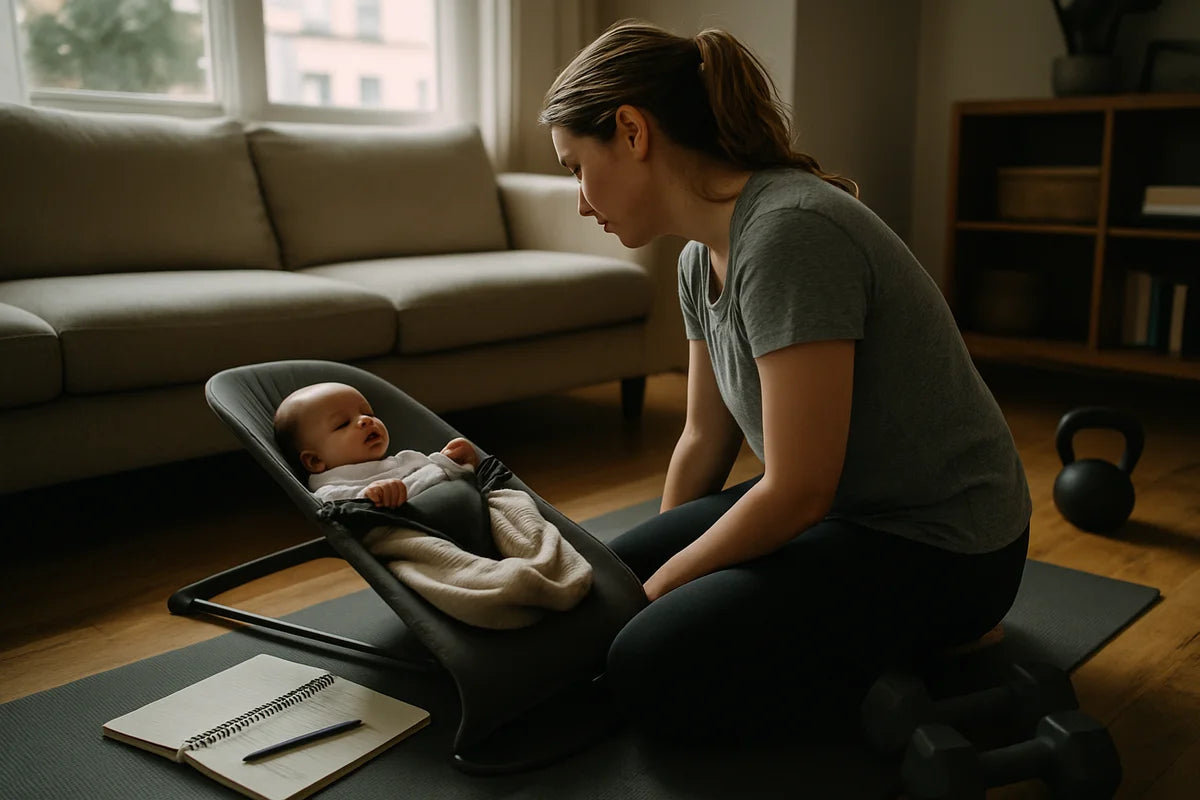
You had a baby. Your body changed, your schedule changed, and your energy probably feels like it comes in short bursts. So when someone says “just get back to working out,” it can sound out of touch.
A balanced workout plan for new moms has one job: help you feel stronger, move better, and handle daily life with less strain. It should fit your recovery, sleep, feeding schedule, and real life. This article walks you through how to build a plan that works, step by step, with options for different births, timelines, and fitness levels.
Start with safety: what “ready to work out” really means

Before you plan sets and reps, check your baseline. Postpartum bodies heal on a timeline that doesn’t care about motivation.
Get medical clearance, then use your symptoms as your guide
Many people get cleared at the 6-week visit, but that’s not a green light for hard training. It’s a basic check. Use it, then pay attention to signs that you need to dial back.
- Vaginal bleeding that gets heavier after exercise (not just normal postpartum spotting)
- Pelvic heaviness, pressure, or bulging
- Leaking urine during effort
- Sharp pain (especially in the pelvis, abdomen, or low back)
- Doming or coning along your midline during core work
If you have any of these, don’t push through. A pelvic health physical therapist can be a huge help. You can find background and postpartum care guidance through ACOG’s overview on exercise after pregnancy.
Know the big factors that affect your plan
A “balanced” plan looks different depending on:
- Vaginal birth vs C-section (and how your scar feels and moves)
- Diastasis recti symptoms (and how you manage pressure)
- Sleep (or lack of it)
- Breastfeeding and calorie needs
- Past training history
Your plan should flex with these, not fight them.
What a balanced workout plan for new moms includes

You don’t need a complicated split routine. You need the basics, done well, in the right dose.
1) Strength training (the backbone)
Strength work helps your hips, back, and shoulders handle constant lifting, feeding, rocking, and carrying. It also supports joint health and posture.
For new moms, the best strength exercises usually share two traits: they build full-body strength and they don’t demand perfect conditions to do them.
2) Low-to-moderate cardio (for stamina and mood)
Cardio should help you feel better, not flatten you. Think brisk walking, easy cycling, low-impact intervals, or a short jog only when your pelvic floor tolerates it.
The CDC physical activity guidelines give a useful weekly target for adults, but postpartum training often starts below that and builds up over time.
3) Mobility and recovery (the glue)
New moms often get stiff through the chest, hips, and upper back. A few minutes of mobility most days can reduce aches fast.
Think: gentle thoracic rotation, hip flexor stretching, ankle mobility, and easy breathing drills.
4) Core and pelvic floor work (done in a smart way)
This is where many postpartum plans go wrong. It’s not about crushing ab workouts. It’s about restoring control and pressure management.
Useful starting points include diaphragmatic breathing, pelvic floor relax and lift coordination, dead bug variations, and carries. If you want a clear explanation of postpartum core and pressure, ACE’s postnatal exercise guidelines are a solid reference.
How to build your plan in 4 steps
Step 1: Pick your weekly minimum (and protect it)
If your schedule is chaos, set a minimum you can hit on a rough week. Then treat anything extra as a bonus.
For many new moms, a good minimum looks like:
- 2 strength sessions (20-35 minutes)
- 2-4 walks (10-30 minutes)
- 5 minutes of mobility on most days
This may not sound like much. It adds up fast when you do it consistently.
Step 2: Choose simple full-body strength sessions
A balanced workout plan for new moms should train these patterns each week:
- Squat or sit-to-stand
- Hinge (deadlift pattern)
- Push (incline push-up, dumbbell press)
- Pull (row variations)
- Carry (farmer carry, suitcase carry)
- Core stability (anti-extension, anti-rotation)
Keep the exercises simple and repeat them for 4-6 weeks. That’s how you get stronger without decision fatigue.
Step 3: Use an effort scale, not a perfect program
Sleep will change your capacity day to day. Rate your effort on a scale of 1-10.
- Easy days: 5-6 out of 10
- Normal days: 6-7 out of 10
- Hard days: 7-8 out of 10 (not often early on)
If you finish a workout and feel shaky, wiped, or sore in a “something feels off” way, it was too hard for that day.
Step 4: Plan progression that respects recovery
Progress doesn’t need big jumps. Use one change at a time:
- Add 1-2 reps per set
- Add a set (from 2 to 3)
- Add a little weight (even 2-5 lb helps)
- Shorten rest times slightly
For many postpartum lifters, adding volume before intensity feels best.
Sample balanced workout plan for new moms (3 levels)
These templates aim to be realistic. Adjust as needed, and stop if you feel pelvic pressure, pain, or increased bleeding.
Level 1: Early return (gentle base)
Best for: very early postpartum with clearance, low sleep, or anyone rebuilding from zero.
- 3-5 days/week: 10-25 minute walk (easy pace)
- 2 days/week: strength (20 minutes)
- Most days: 5 minutes mobility and breathing
Strength session example (2 sets each):
- Sit-to-stand from a chair: 8-12 reps
- Hip hinge with light dumbbells or no weight: 8-12 reps
- Incline push-ups on a counter: 6-10 reps
- One-arm row (dumbbell or band): 8-12 reps per side
- Suitcase carry: 20-40 seconds per side
Level 2: Building strength (simple and steady)
Best for: you can walk comfortably, symptoms are stable, and you want real strength progress.
- 2-3 days/week: strength (30-40 minutes)
- 2-4 days/week: walking or low-impact cardio (15-30 minutes)
- 1 day/week: optional longer walk or easy hike
Strength day A (3 sets each):
- Goblet squat: 8-10 reps
- Dumbbell Romanian deadlift: 8-10 reps
- Incline dumbbell press: 8-12 reps
- Chest-supported row: 8-12 reps
- Pallof press: 8-12 reps per side
Strength day B (3 sets each):
- Reverse lunge or split squat (hold onto support if needed): 6-10 reps per side
- Hip thrust or glute bridge: 10-12 reps
- Overhead press (light): 6-10 reps
- Lat pulldown or band pulldown: 8-12 reps
- Farmer carry: 30-60 seconds
If you want deeper strength programming ideas that still stay practical, Breaking Muscle’s training articles often have clear exercise progressions you can adapt.
Level 3: Return to higher intensity (only when your body agrees)
Best for: you’ve rebuilt a base, pelvic floor symptoms are quiet, and you miss harder training.
- 3 days/week: strength (40-50 minutes)
- 2 days/week: cardio (one easy, one intervals)
- Daily: 5-10 minutes mobility
Interval idea (low impact): 6-10 rounds of 1 minute brisk effort, 1-2 minutes easy walk.
For running returns, build slowly and watch for leaking, pressure, or heaviness. A staged return plan like the one outlined by this British Journal of Sports Medicine postpartum running guidance can help you set safer checkpoints.
Make it work with a baby: time, gear, and setup
Use “micro workouts” on hard days
If a full session feels impossible, do 10 minutes. Set a timer and cycle through:
- Bodyweight squats: 10 reps
- Incline push-ups: 8 reps
- One-arm row: 10 reps per side
- Carry a dumbbell or kettlebell: 30 seconds per side
Three rounds is plenty. You kept the habit and you trained the big patterns.
Choose equipment that earns its place
You don’t need a full home gym. These tools cover a lot:
- One pair of adjustable dumbbells or two moderate dumbbells
- A long resistance band
- A mini band
- A yoga mat
If you want a simple way to estimate training heart rate zones for walks or rides, a practical tool like this target heart rate calculator can help you stay in an easy-to-moderate range.
Pair workouts with baby routines
- Do mobility during tummy time
- Walk right after a feed (if that’s your calm window)
- Strength train during the first nap, not the last one
- Keep one “no setup” session (bands only) for messy days
Nutrition and recovery: the part that makes training feel good
You can write the best plan in the world and still feel awful if you under-eat and under-sleep.
Eat enough to support training and healing
Many new moms try to “work off” pregnancy weight fast. That backfires. Hunger and low energy can spike, milk supply can suffer for some people, and training quality drops.
Use simple anchors:
- Include protein at each meal (eggs, yogurt, chicken, tofu, beans)
- Add fiber and color (fruit, veg, oats, whole grains)
- Don’t fear carbs around workouts, especially if you breastfeed
- Drink water through the day, not just during exercise
If you breastfeed, you may need extra calories. For a plain-language overview, the NHS guidance on diet and breastfeeding is helpful.
Make sleep loss part of the plan
When you sleep badly, lower the bar on workout intensity. Keep the session, cut the load. This is how you stay consistent without digging a hole.
- Swap intervals for an easy walk
- Do 2 sets instead of 3
- Pick machines or supported moves over balance-heavy moves
Common mistakes that slow progress (and what to do instead)
Doing too much core work too soon
Skip high-pressure moves early on (fast sit-ups, long planks, aggressive twisting) if you see doming or feel pressure. Build control first, then intensity.
Training like sleep doesn’t matter
If you treat every day like a “normal” day, you’ll stall. Adjust effort to match recovery.
Only doing cardio
Walking is great. But strength work is what makes carrying a baby, lifting a car seat, and climbing stairs feel easier.
Comparing your timeline to someone else’s
Two people can give birth the same day and have totally different recoveries. Your plan should match your body, not a highlight reel.
Looking ahead: how to keep your plan moving with you
Your balanced workout plan for new moms should change as your baby changes. Once you’ve hit your weekly minimum for a month, pick one next step:
- Add a third strength day, even if it’s only 20 minutes
- Choose one lift to improve and track it for 6 weeks
- Try a new goal that isn’t about weight, like 10 full push-ups or a longer carry
- Book a pelvic floor PT check-in to get clear on running, jumping, and heavier lifting
Keep it simple. Keep it repeatable. If your plan helps you feel steady, strong, and more like yourself, you’re doing it right.
Share:
ACFT Standards: What You Need to Pass, and How to Train for Them
Small Apartment, Strong Body: Home Fitness Equipment That Fits and Gets Used